

You have been practising one word. Akwaaba. You looked up how to say it and how to hear it, and you have decided that if you can just recognise the welcome when it comes, you will be alright. Underneath that is a quieter fear, the one you have not said out loud: that you will land in Accra and be treated as a stranger in the one place you were told was home.
It is one of the most common questions diaspora travellers carry to Ghana, and it is almost never asked directly. Will they accept me if I do not speak the language? The honest answer has two parts, and the first part is a relief.
Language is not the barrier you are afraid of
English is an official language of Ghana. It is the language of school, of business, of most signs, and of nearly every conversation you will need to have as a visitor — in Accra, in Kumasi, at Cape Coast. You can move through the country, ask for directions, order food, and have long talks with people, without a word of Twi. The practical fear, the one about getting by, you can set down.
What shapes how you are received is not vocabulary. It is how you carry yourself.
What people actually respond to
Ghanaians, broadly, extend warmth to people who arrive with humility. A greeting before a request. A little patience. The willingness to be taught rather than to perform that you already know. None of that requires Twi. It requires attention.
A handful of words, offered without worrying about your accent, goes a long way — not because the words are necessary, but because the effort is read as respect.
- Akwaaba — welcome. You will hear it more than you say it.
- Medaase (meh-DAH-seh) — thank you.
- Ɛte sɛn? (eh-teh-SEN) — how are you?
- Yɛɛ adwuma — well done, said to someone working.
Use the right hand when you give or receive. Greet the elder in the room first. These small things are noticed far more than whether your grammar is correct.
On being called "obroni"
You may be called obroni — and it can land strangely, because you came expecting to be seen as a returning relative, not a foreigner. It helps to know what the word is and is not. Obroni describes a foreigner, an outsider, someone from across the water; it is used for diaspora visitors as readily as for anyone else, and it is rarely meant as a wound. It is a category, shaped by history, not a verdict on your belonging.
Sitting with that is part of the preparation. You are African and you are also, to the person in the market, from somewhere else — and both of those are true at once. The people who have made this trip describe the discomfort softening once they stopped needing to be immediately recognised, and let themselves be slowly known instead.
The locals don't seem to get me probably because I don't attend church all the time like they do. So that seems to pose a challenge in how they feel they can relate to me.— Latoya Brown, African American living in Ghana, interviewed by African American In Africa (2016)
That tension is real, and it is worth naming. Belonging in Ghana is often built through shared rhythms — church on Sunday, a funeral on Saturday, the long greeting that is not in a hurry. You do not have to adopt any of it to be treated well. But understanding that this is how community is held there helps you read a room that might otherwise feel closed.
What acceptance actually looks like
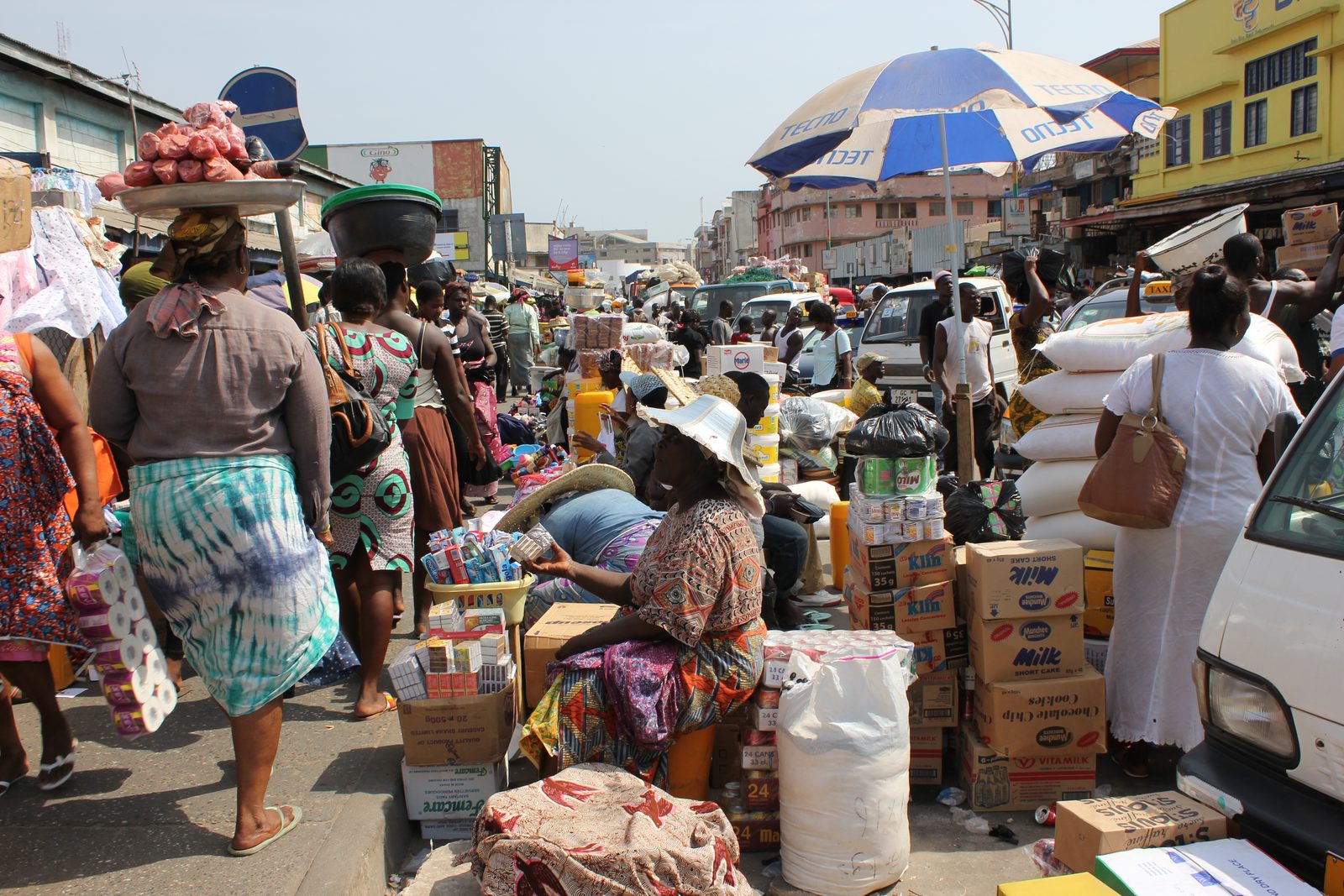
It is rarely a grand welcome. It is the trader who drops the tourist price once you greet her properly. It is the elder who corrects your pronunciation and then teaches you the next word. It is being fed. Acceptance in Ghana is practical and slow, and it is offered to the visitor who shows up with respect and stays long enough to be known.
You do not need Twi for any of that. You need humility, a little patience, and the willingness to be a learner in the place you came to call home.
The Heritage Preparation Pack is free.
A practical guide to preparing — emotionally, culturally, and on the ground — for a return to Ghana. Built with Ghanaians, yours to download at no charge.
Get the free pack →Sources & further reading
- "Moving to Ghana? African American Expat Says Nothing Should Stop You" — African American In Africa (2016) — Latoya Brown's first-hand account of life and belonging in Ghana.
- AFROFEAST Comprehensive African Heritage Tourism Report, 2025.
- Ghana — official and educational sources on Akan greetings and the Twi language.