
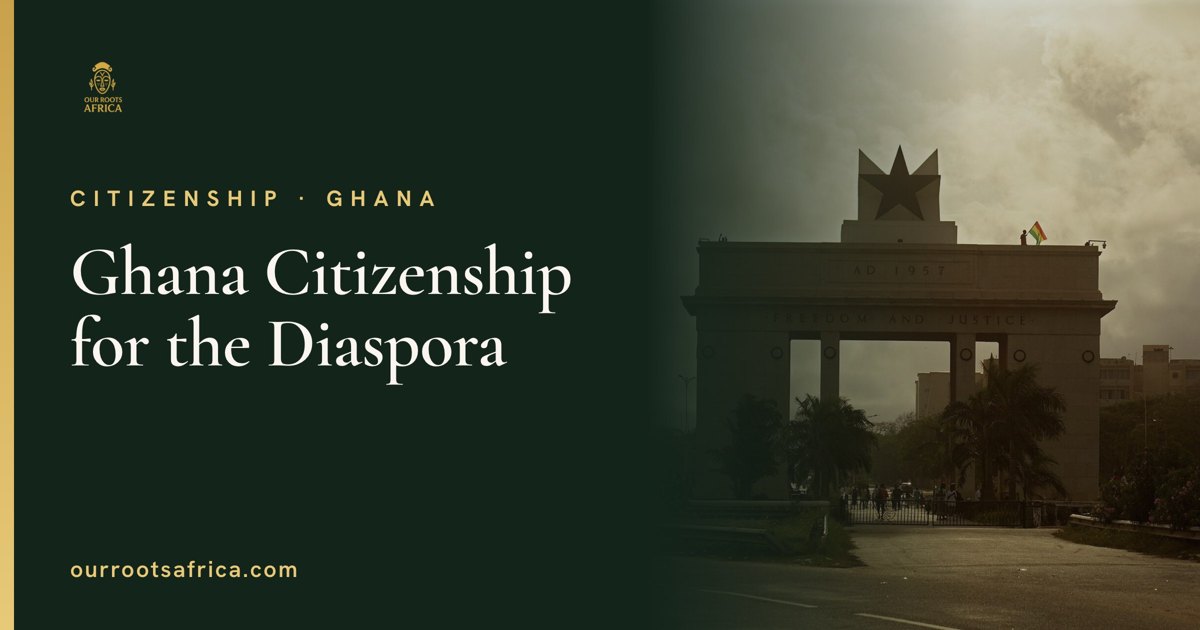
For some people, the DNA result and the first trip are not the destination — they are the beginning of a question: could I actually come home? Ghana has, for the last decade, offered a formal answer. Since 2016, more than 1,000 people of African descent have applied for Ghanaian citizenship through the country's diaspora pathway, and approximately 950 have been granted full citizenship — most of them during and after the 2019 Year of Return. Among the recipients are well-known figures including Stevie Wonder and a number of musicians, athletes and entrepreneurs. In February 2026, however, Ghana's Ministry of the Interior and the Office of Diaspora Affairs paused the program for procedural review. This is what the pathway looked like when it was active, what the pause actually means, and what your options are right now.
The Ghana citizenship-by-descent pathway for the African diaspora is temporarily paused as of 1 February 2026. The Government has said it will issue "updated timelines and guidelines… in due course." Right of Abode (a separate, indefinite-stay status) remains available. We will update this article when the program resumes.
The two pathways
Ghana offers two distinct pathways to people of African descent who wish to formalise a long-term tie with the country. They are easy to confuse — but the rights and process are different.
| Pathway | What it grants | Right to land? | Right to vote? |
|---|---|---|---|
| Citizenship by descent | Full Ghanaian citizenship and passport | Yes — perpetual land ownership | Yes (once all formalities complete) |
| Right of Abode | Indefinite right to live and work in Ghana | No (50-year lease only, like other foreigners) | No |
The key practical difference is land. Foreigners in Ghana cannot own land outright; they can only lease it for up to 50 years. Full citizens can own land in perpetuity. For diaspora-Africans considering investing or building a home, that distinction tends to matter most.
Citizenship by descent — the process (when active)
When the program was last open, the process worked roughly as follows:
- Application. Submit the citizenship application form, along with supporting documents (passport, evidence of African descent, references). Application fee approximately $136.
- Shortlisting. Successful initial applicants are invited to proceed. Secondary fee approximately $2,280 upon shortlisting.
- DNA evidence. Applicants have, in past cohorts, been required to submit DNA evidence of African ancestry within a short window — historically as little as one week, which drew significant criticism from advocacy groups for being impractical for most applicants.
- Orientation. A one-day orientation programme on Ghanaian civic life, history and the responsibilities of citizenship.
- Ceremony & oath. Successful applicants are invited to a citizenship ceremony, take the oath of allegiance, and are formally granted citizenship.
- Passport issue. A Ghanaian passport is issued following citizenship grant.
Total out-of-pocket cost when the program was running: approximately $2,400–$2,500 in government fees alone, plus DNA testing (typically $99–$199 with AncestryDNA or 23andMe), document certification, and (for most diaspora applicants) at least one trip to Ghana for the ceremony.
Why the program is paused
The February 2026 suspension reflects three accumulated tensions, according to government statements and reporting from Ghana Broadcasting Corporation and Reuters:
- Administrative bottlenecks. Of the approximately 1,000 applicants since 2016, many have struggled with the DNA-evidence requirement and the limited orientation slots. The Diaspora African Forum's ambassador has publicly described the one-week DNA window as "impossible" for most applicants.
- Domestic economic pressure. The arrival of diaspora-Africans, particularly in Accra, has contributed to a real-estate squeeze. Reports of monthly rents rising from $111 to $800 for the same units, and luxury-housing inflation in Accra suburbs, have made the program politically harder to expand without addressing local housing supply.
- The "citizenship by investment" concern. Some Ghanaian civic voices have argued that the program risks evolving into a wealth-gated pathway, contrary to its Pan-African intent. The pause is, in part, an opportunity to redesign the process.
The Government has not announced a resumption date. The statement reads: "The temporary suspension will provide the necessary time to refine the procedures and ensure a smoother experience for applicants once the process resumes."
Right of Abode — currently available
While citizenship is paused, Right of Abode remains a viable pathway. Established in 2000 under the Immigration Act, expanded for the diaspora in 2007 under the Joseph Project, and broadened further during the Year of Return era, Right of Abode confers:
- Indefinite stay in Ghana with no visa or work-permit renewal required.
- Right to work in Ghana for any employer or as self-employed.
- Right to access most public services on the same terms as Ghanaians.
- Not the right to vote.
- Not the right to own land in perpetuity (50-year lease only).
- Not a passport. You retain your existing citizenship.
To be eligible, you must demonstrate African descent (often through DNA evidence or genealogical records), good character, and means of support. Application is to the Ministry of the Interior through the Ghana Immigration Service.
The Joseph Project
Launched in 2007 — well before the Year of Return — the Joseph Project is the specific government initiative supporting diaspora-Africans through citizenship and Right of Abode processes. Named after the biblical Joseph (taken from his homeland but reunited with his family in old age), the project has been the practical arm of Ghana's diaspora policy. Applications for Right of Abode are typically channelled through the Joseph Project office, working with the Office of Diaspora Affairs at the Presidency.
We walked into the office ready to apply and walked out empty-handed. — An African-American expat in Accra, quoted in BBC reporting on the program's procedural difficulties (2026)
What it actually means to be a Ghanaian citizen
For diaspora-Africans who completed the process in earlier cohorts, three things have been most often described as meaningful:
- The right to buy land outright. The single most cited reason for pursuing full citizenship over Right of Abode. This matters particularly for people building family compounds, agricultural projects or long-term homes.
- The passport itself. A document that names you, in writing, as a citizen of the country your ancestors were taken from. Many report it as the most emotionally significant piece of paper they own.
- The vote. Once all formalities are complete, you can vote in Ghanaian elections — a civic responsibility that publicly distinguishes citizenship from Right of Abode.
What to do now (April–May 2026)
- If you have already applied: contact the Office of Diaspora Affairs at the Presidency (Accra) to confirm your file's status. Existing applications will be processed under the revised guidelines once the pause lifts.
- If you were about to apply: hold. Use this time to assemble your supporting documents (DNA test, birth records, character references, financial statements). When the program resumes, faster movers will be among the first invited.
- If indefinite stay is what you actually need: consider Right of Abode now. It is unaffected by the citizenship pause and is the faster route for most practical purposes.
- If you only need to spend extended periods in Ghana: a long-stay visa or visiting permit is sufficient and avoids the citizenship process entirely. Ghana's 60–90 day tourist visa is extendable.
Ghanaian citizenship is a process, not a transaction. Public interviews with past recipients (cited in BBC and GBC reporting on the program) consistently describe the same arc: the most important preparation is not the paperwork — it is showing up in Ghana repeatedly over years, learning a greeting, knowing the political moment, and building actual relationships with Ghanaians. The passport is the ceremony. The work is everything before it.
Citizenship is downstream of preparation.
The OurRoots.Africa heritage preparation platform is being built for diaspora-Africans walking the long path home. Join The Walk →
Join The Walk →Sources cited in this article
- Government of Ghana, Ministry of the Interior & Office of Diaspora Affairs — statement on suspension of citizenship pathway (February 2026).
- Ghana Broadcasting Corporation — "Uncertainty grips global African diaspora as Ghana halts citizenship pathway" (5 February 2026).
- Ghana Immigration Service — Right of Abode framework: gis.gov.gh
- Ghana Citizenship Act, 2000 (Act 591) and subsequent amendments.
- Office of Diaspora Affairs at the Presidency — Joseph Project documentation.
- BBC reporting on Ghana citizenship procedural difficulties (early 2026).
- Diaspora African Forum statements via BBC.