Most heritage itineraries stop at the coast. Cape Coast Castle. Elmina. The Door of No Return. These are the sites that hold the official history — the ones that appear in tour packages, in documentaries, in the Instagram posts travellers bring home. They matter. But there is a place further inland, quieter, less photographed, that sits at a different point in the same story.
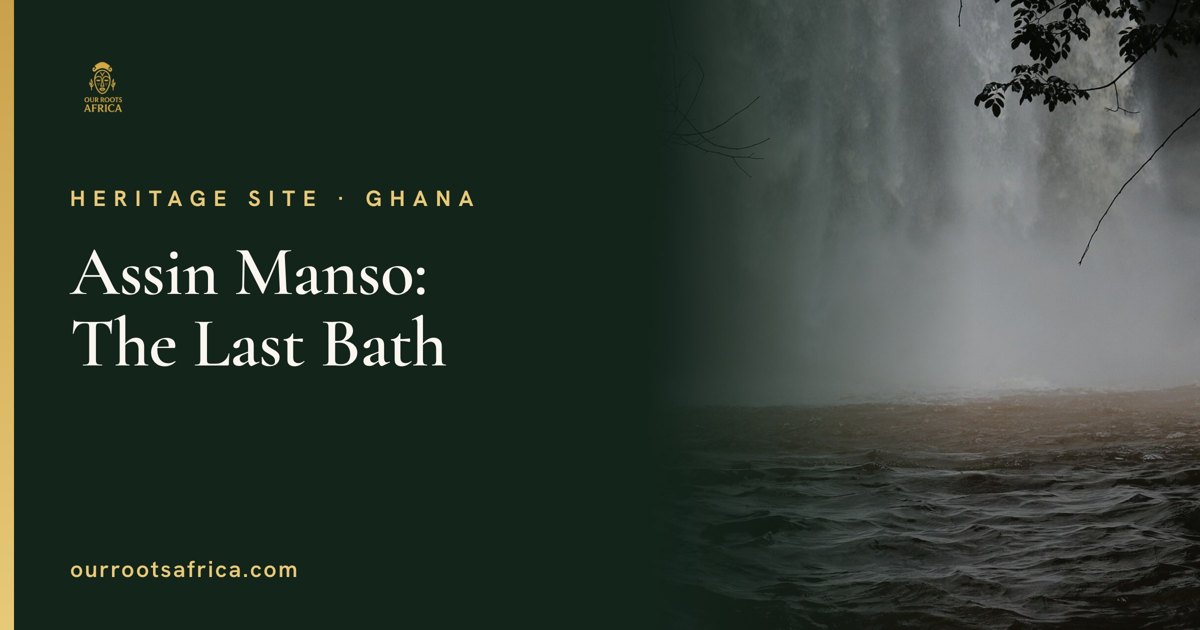
Assin Manso is forty kilometres from Cape Coast. It is the river where enslaved Africans bathed for the last time before they were marched to the forts and held in the dungeons and loaded onto ships. It was their last contact with Ghanaian soil. The last fresh water. The last moment before the ocean.
There is no large tour group — just the GTDC's modest posted entry fee (around GH₵40 for non-resident adults, confirm on arrival). A local priest leads a libation ceremony at the river — an ancestral communication ritual, an act of spiritual reconnection that has been performed here for returning diaspora visitors for decades. Those who have been there describe it as the place where something shifted. Where the abstraction of history became specific. Where they stood on ground their ancestors stood on — not at the end of the journey, but at the moment before it began.
The priests who lead the ceremony speak of the river as holding the spirits of the ancestors — and of the diaspora visitor's arrival not as a visit, but as a return the water has waited centuries to receive. — How the ceremony is described to returning visitors at Assin Manso
Twenty minutes at Elmina Castle, when the place deserved a day. That is the most common regret diaspora visitors report after returning from a Ghana heritage trip — not the sites they missed, but the time they did not give themselves at the ones they found. Assin Manso requires more than a stop on the drive back to Accra. It requires intention. It requires a morning, not an afternoon. It requires knowing, before you arrive, what kind of place you are entering.
This article is about that preparation.
Why most visitors skip it — and what they miss
The standard heritage itinerary runs Cape Coast, Elmina, and Kakum National Park. Those three sites fill a full day and they are what the operators know how to sell. Assin Manso requires a detour, a guide who knows the site, and a willingness to spend time somewhere that does not have a gift shop at the exit.
It also requires a different kind of preparation. The castles hold public history — dates, names, trade routes, the architectural evidence of what happened. Assin Manso holds something harder to categorise. It is a spiritual site, not a museum. The libation ceremony is not a performance for tourists. It is an actual ritual, led by an actual priest, that diaspora visitors are invited to participate in if they choose. That invitation is real. Understanding what it is before you arrive changes what it means to accept it.
The Three Sites — What to Expect at Each
A direct comparison. Use this to plan your circuit, not just your day.
| Site | What it is | Emotional register | Time needed | Entry |
|---|---|---|---|---|
| Cape Coast Cape Coast Castle |
UNESCO World Heritage. Major Atlantic slave trading fort. Dungeons, Governor's quarters, Door of No Return. | Heavy. Grief. Rage. Awe. Very few people walk out unaffected. | 3–4 hours minimum. Allow time to stop. | GH₵30–50 with guide |
| Elmina Elmina Castle |
First European structure in sub-Saharan Africa (1482). Both a fort and a place of healing for many returnees. | Complex. The guide matters enormously here — a good one changes everything. | 2–3 hours. Do not rush. | GH₵20–40 with guide |
| Assin Manso The Last Bath |
The river site. The final bathing point before the march to the coast. Spiritual ceremonies. No museum framing. | Quiet. Specific. Many describe it as the site where the history became personal rather than historical. | 3 hours minimum. Morning preferred — ceremonies run earlier. | GH₵40 non-resident adult (GTDC posted rate — confirm on arrival) |
What actually happens there
You arrive at a clearing near the river. There are graves at the site — the burial places of two Africans whose remains were repatriated from the United States and Jamaica in 1998 as part of a formal ceremony. The plaques mark the names. The graves mark something that cannot be named cleanly.
The river itself is slow-moving. There is no dramatic waterfall. No viewing platform. It looks like a river in inland Ghana, which is what it is. The significance is not in how it looks — it is in what it holds.
The libation ceremony, when it happens, involves the priest speaking to the ancestors, pouring water and palm wine into the river, and inviting those present to add their own words if they choose. You are not required to speak. You are not required to participate in any specific way. The invitation is open. What you bring to it is yours.
Before You Arrive — Five Things to Know
Tap each card. These are not rules — they are what the site asks of you.
Go in the morning
›
Libation ceremonies at Assin Manso typically run in the morning. The site is quieter. The light is different. Arriving before 10am gives you the ceremony and the space. Coming at 3pm after a full morning at Cape Coast means you are already at capacity — the site deserves more than that.
Participating in the libation
›
You will be invited to participate. You do not have to. If you choose to speak during the ceremony, speak directly and specifically — a name, if you know one, or a feeling, if you do not. The priest is not performing for you. You are standing in something that has been going on for a long time. Be present for it.
Photography at the river
›
The graves and the ceremony space are not backdrops. Ask the priest or your guide before you take any photographs at the ritual site. The river bank is generally fine. The ceremony itself — ask. If you are unsure, put the phone away. The image will not capture what was there anyway.
What to wear
›
The path to the river can be uneven and muddy after rain. Closed shoes or sandals with grip. Lightweight long trousers or a long skirt for the ceremony are appropriate — not required, but they signal that you came prepared to be present rather than to take photos. Bring water. There is no café.
Silence is fine
›
You may arrive and find that you have nothing to say. That is not a failure. The graves are marked. The river does not require you to perform grief at it. Standing there and being still is a valid and complete way to be at Assin Manso. Give yourself permission to not have an articulate response to something that resists articulation.
Getting there from Cape Coast
Returnees often describe walking through the dungeons at Cape Coast Castle as the most powerful experience of their lives — and say it was a local guide who helped them understand not just the history, but what the place means spiritually for the ancestors who passed through it.
That experience — understanding the spiritual significance, not just the historical facts — is what Assin Manso offers in a form that the castles, by their nature, cannot. The castles are the end of the story on Ghanaian soil. Assin Manso is forty kilometres earlier in the same journey. Going to one without the other is reading the last chapter and skipping the one before it.
"Forty kilometres from Cape Coast is Assin Manso — the last place enslaved Africans bathed before they were taken to the coast. Most heritage itineraries do not include it. Those who go describe it as the place where something shifted — where the abstraction of history became specific. It is quieter than the castles. A local priest leads a libation ceremony at the river. If you are going to Ghana, consider making the time."
This script is part of our Lesson series — short, specific, one thing per video. Follow @ourroots.africa to see when it drops.
The Heritage Prep Pack covers what the castle tour guide won't tell you.
Including the walking ATM dynamic, cultural protocol at sacred sites, what fair prices look like, and a circuit guide that goes beyond Cape Coast. One-time, no subscription.
Get the free Heritage Prep PackOr start free: Take the Travel DNA Quiz →