
The question comes up in every diaspora group chat: can I actually afford to live in Accra, and what will my money be worth when I get there. The honest answer is that it depends far more on how you choose to live than on the exchange rate. Live the way Accra lives and your dollar or pound stretches a long way. Try to recreate a London or Atlanta life in an Accra postcode and you can spend more than you did at home. This guide lays out the real 2026 numbers — in cedis, US dollars and pounds — so you can plan with your eyes open.
A single person renting a modest one-bedroom outside the city centre, cooking at home and using shared transport, can live in Accra on roughly $700–$1,100 (£520–£820) a month including rent. A couple wanting a furnished two- or three-bedroom in a diaspora-favoured neighbourhood, eating out often and running a car, should budget $2,000–$3,500 (£1,500–£2,600) a month or more. The gap between those two numbers is the whole story.
How we arrived at these figures
Every price below is drawn from a named, dated source rather than a memory or a guess. The everyday cost data is from Numbeo's Accra cost-of-living dataset, last updated 28 June 2026. The currency conversions use the interbank rate as at early July 2026: 1 US dollar to about 11.41 cedis, and 1 pound to about 14.99 cedis. Rates move, so treat the dollar and pound columns as a snapshot and check a live rate before you transfer money.
One caution worth stating plainly. Crowd-sourced datasets like Numbeo lean toward local-standard housing. The furnished apartments most returnees actually rent — in East Legon, Cantonments, Airport Residential, Labone — are quoted in US dollars and cost several times the figures in the housing table below. We flag that gap where it matters, because being surprised by it is one of the most common and most expensive mistakes a newcomer makes.
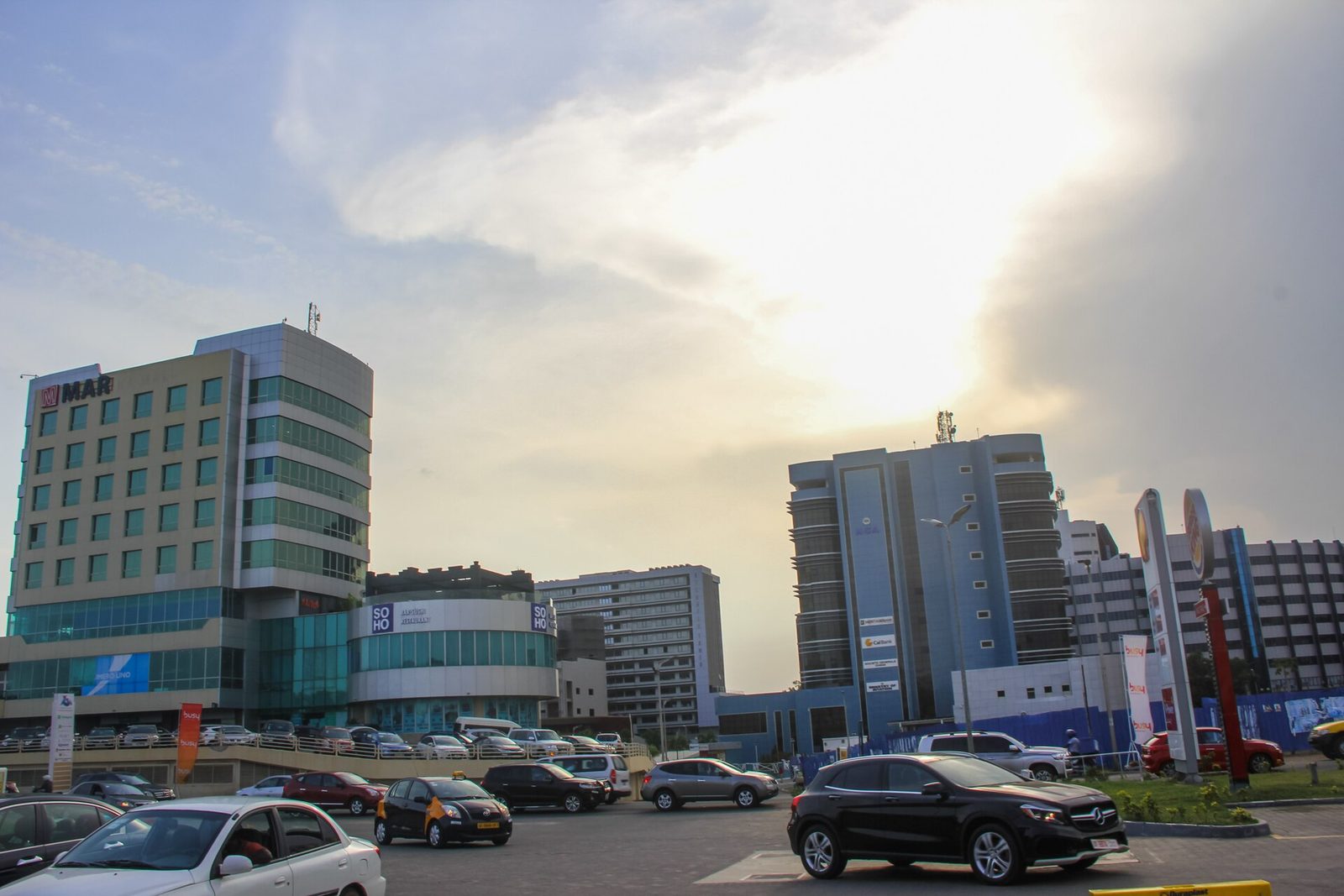
Housing: the number that decides everything
Rent is where your budget is won or lost. Here is the crowd-sourced Accra baseline, as at 28 June 2026.
| Monthly rent | Cedis (₵) | US$ | £ |
|---|---|---|---|
| 1-bedroom, outside centre | ₵3,205 | $281 | £214 |
| 1-bedroom, city centre | ₵7,798 | $683 | £520 |
| 3-bedroom, city centre | ₵12,541 | $1,099 | £837 |
Those figures describe housing let to locals on local terms. A furnished, secure, generator-backed apartment in the neighbourhoods most newcomers gravitate to is a different market — commonly $800 to $2,000 a month and up, priced in dollars, and very often with one to two years' rent demanded in advance. That upfront lump sum, not the monthly figure, is what catches people out. Budget for it before you fly, and never wire a deposit on a place you have not had someone trustworthy inspect.
Utilities and bills
Basic utilities — electricity, water, cooling and refuse for a mid-sized apartment — run about ₵845 a month ($74 / £56) on the Numbeo figure, though air-conditioning and a backup generator push that up in the hot months. Mobile data is inexpensive and near-universal; a monthly bundle costs a fraction of what you pay at home. Two lines and a decent data allowance rarely top ₵200–₵300 ($18–$26 / £13–£20) a month between them.
Food: where your money goes furthest
This is the part of the budget that most rewards living like a local. A meal at an inexpensive restaurant is about ₵85 ($7.50 / £5.70). Everyday staples from the market are modest: a litre of milk around ₵42 ($3.70 / £2.80), a 500g loaf of bread around ₵21 ($1.80 / £1.40). Buy your rice, plantain, tomatoes, pepper and fish from a market like Makola or Madina rather than an imported-goods supermarket and your weekly food spend falls sharply. Imported cereals, cheeses and branded Western products are the exception — those often cost more than they do abroad, because someone shipped them in.
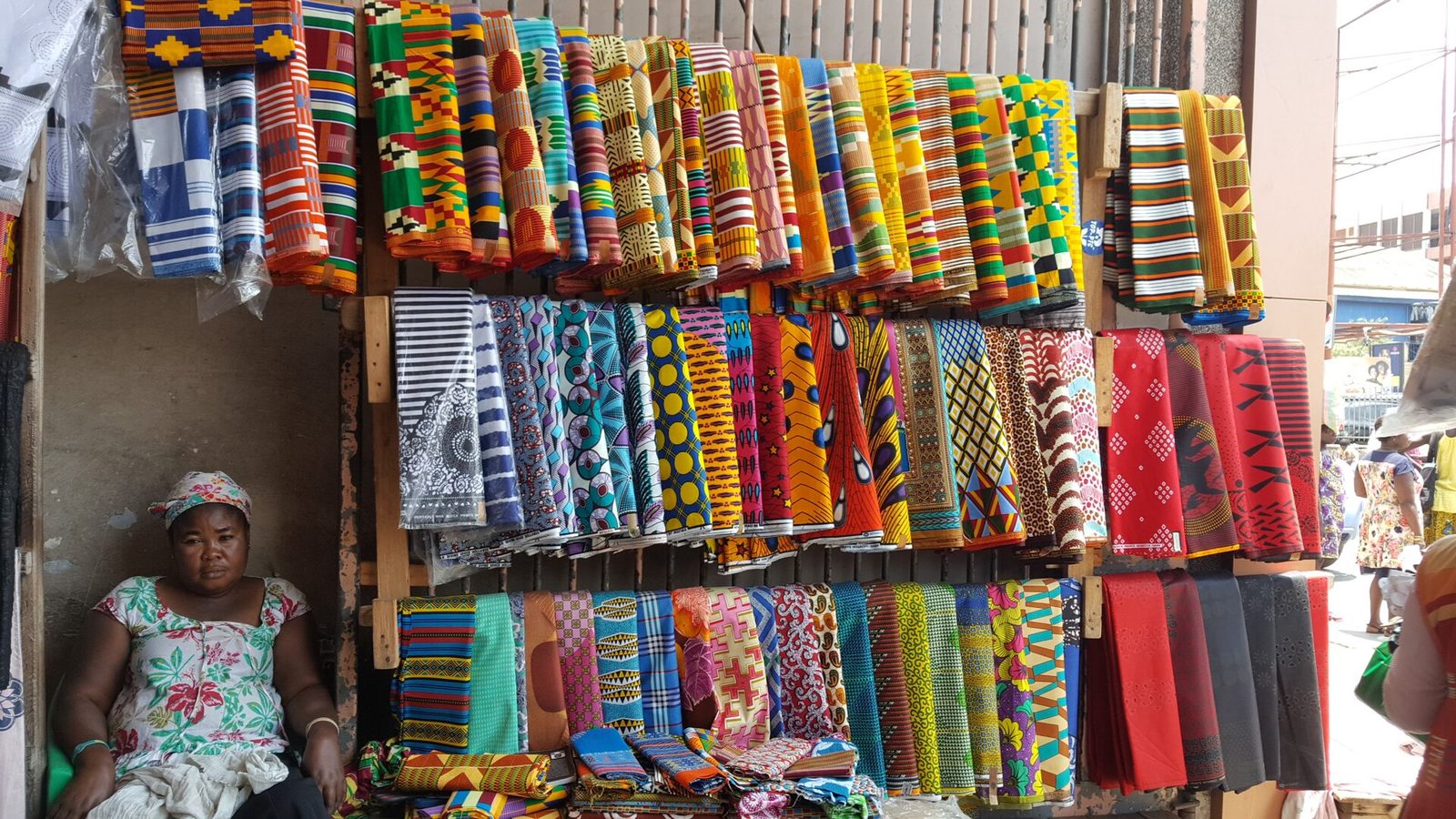
The pattern holds across the whole basket: what Ghana grows and makes is cheap, and what Ghana imports is dear. A newcomer who eats waakye, jollof, kelewele and fresh produce spends a little; a newcomer who insists on the same imported brands they bought at home pays a premium for the privilege. Neither is wrong — but they are very different monthly numbers, and it helps to know which one you are choosing.
Getting around
Accra gives you a wide range, from a few cedis to a car payment. A shared tro-tro (the minibuses that form the backbone of the city's transport) or a single local trip runs about ₵18 ($1.55 / £1.20). App-based rides through Bolt and Uber are widely used, affordable by Western standards, and the sensible default for a newcomer still learning the routes. A monthly figure for someone relying on shared and app transport is modest. Buying and running a car — with fuel, insurance and Accra's traffic — is a far larger commitment, and one most people are wise to delay until they have found their feet. Our guide to getting around Ghana safely covers the practicalities.
Two honest monthly budgets
Numbers in isolation mislead. Here are two realistic monthly pictures for a single person — the same city, two different lives.
| Monthly budget (one person) | Living like Accra | Diaspora comfort |
|---|---|---|
| Rent | ₵3,205 ($281) | ₵11,400 ($1,000) |
| Utilities & data | ₵1,000 ($88) | ₵1,700 ($149) |
| Food & household | ₵2,500 ($219) | ₵5,000 ($438) |
| Transport | ₵700 ($61) | ₵2,500 ($219) |
| Leisure & buffer | ₵1,000 ($88) | ₵4,000 ($351) |
| Roughly | ₵8,400 ($737 / £560) | ₵24,600 ($2,157 / £1,641) |
Most newcomers land somewhere between the two columns and drift leftward as they settle, learn the markets, and stop paying the newcomer premium. The single biggest lever, again, is the rent line.
What the wider price picture looks like
Prices in Ghana are, for now, comparatively steady. The Ghana Statistical Service reported year-on-year inflation of 5.3% for June 2026 in its release of 1 July 2026 — up a little from May, but far below the 13.7% recorded a year earlier, in June 2025. Greater Accra specifically came in at 5.8%. That relative calm, together with a cedi that has held its ground against the dollar and pound through the first half of 2026, means the figures in this guide are less of a moving target than they would have been in recent years. Still, check a live exchange rate and a current listing before you commit to anything.
So what does your dollar and pound actually buy
Enough, if you let Accra set the terms. Home-cooked food, local transport, a modest but comfortable place away from the priciest postcodes, mobile data to stay in touch — all of it sits well within a middle-class Western income, and often within a careful one. Where the money evaporates is in trying to import your old life wholesale: the dollar-priced apartment, the imported groceries, the car bought in the first month. Those are choices, not necessities, and knowing that before you arrive is half the battle.
The other half is planning for the lump sums — the upfront rent, the flights, the setting-up costs — rather than only the monthly ones. Our companion piece on what a trip to Ghana actually costs in 2026 works through the one-off numbers, and the budget planner lets you build your own figure.
The Heritage Preparation Pack is free.
Twelve preparation modules on arriving well — culturally, practically and financially — built with Ghanaians. No charge. Get the free pack →
Get the free pack →Sources cited in this article
- Numbeo — Cost of Living in Accra, Ghana (dataset last updated 28 June 2026): numbeo.com/cost-of-living/in/Accra
- Ghana Statistical Service — Consumer Price Index, June 2026 (released 1 July 2026): statsghana.gov.gh
- Trading Economics — USD/GHS interbank rate, as at 2 July 2026: tradingeconomics.com/ghana/currency
- Photograph: Accra skyline by Synth85, CC BY-SA 4.0, via Wikimedia Commons: commons.wikimedia.org
- Photograph: A trader at Makola Market by Vrinda Khushu, CC BY-SA 4.0, via Wikimedia Commons: commons.wikimedia.org